

Each new hire creates added compliance responsibility for you. Missing documents, expired visas, or incorrect leave records can become an operational hassle later if not kept in check. That’s why a lot of businesses rely on a HR compliance checklist in UAE to the extent that it becomes an essential part of running a responsible and scalable business for them.
HR compliance can be simple, and you do not have to memorize every labour regulation or turn your HR team into legal experts to experience that ease. Instead, what you need is a practical system which keeps your business compliant for the entire recruitment process.
In our guide, we provide you with a simple and actionable checklist covering the major compliance responsibilities every UAE employer should monitor throughout the employee lifecycle.
Why HR Compliance Matters Beyond Avoiding Penalties?
A lot of businesses associate compliance with avoiding government fines. While that is certainly important, the benefits go much further. Strong HR compliance helps you build trust with employees, reduce legal disputes, protect your company during audits, improve operational consistency, support business expansion, and strengthen your employer reputation.
For example: if your business is hiring ten employees in a busy quarter, and if contracts are inconsistent, visa renewals are manually tracked, and leave balances are saved and tracked in different spreadsheets, mistakes become inevitable.
But with a structured compliance process, you can make it certain that every employee has the same documented process, starting from their hiring through resignation.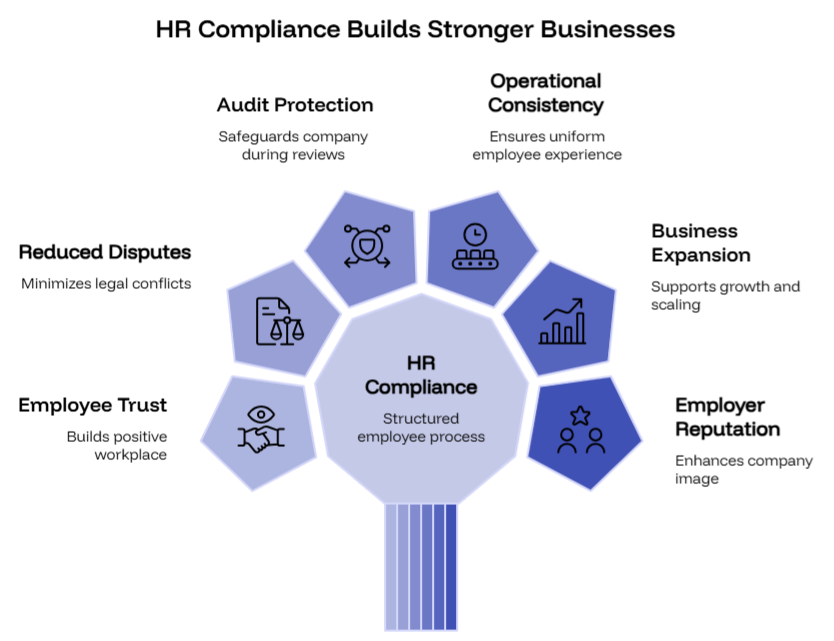
HR Compliance Checklist for UAE Businesses:
Instead of treating compliance as a once a year task, you should review these following checkpoints regularly.
1. Verify Employment Eligibility Before Hiring:
Before onboarding any employee, confirm that every hiring requirement has been completed. For example: your company hires a marketing executive but processes a visa under an unrelated occupation. During an inspection, the mismatch creates unnecessary compliance complications for your business. With simple verification at the beginning, you can prevent larger issues later.
Your checklist should include the following tasks:
- Verify passport and identification documents.
- Confirm eligibility to work in the UAE.
- Complete required visa documentation.
- Ensure job title matches approved visa category.
- Maintain copies of all supporting documents.
2. Issue Compliant Employment Contracts:
Employment contracts form the foundation of the employment relationship, setting clear expectations and protecting the rights of both employer and employee from day one.
Before an employee starts work, you should verify the following points:
- Employment contract is completed.
- Contract reflects agreed salary.
- Job title is accurate.
- Working hours are documented.
- Probation period is specified.
- Employee signs before commencement.
- Company retains signed copies.
3. Maintain Complete Employee Files:
One of the most overlooked items in any HR compliance checklist UAE that all companies should follow is maintaining accurate employee records.
Digital document management makes future audits significantly easier. So instead of searching multiple email threads for a signed contract, HR can retrieve the entire employee file within minutes.
We have a checklist here for what every employee file should include:
- Passport copy.
- Emirates ID copy.
- Visa copy.
- Signed employment contract.
- Educational certificates where applicable.
- Job offer letter.
- Salary amendments.
- Performance documentation.
- Warning letters*.
- Emergency contact information.
*if applicable
4. Ensure WPS Salary Compliance:
The Wage Protection System (WPS) is important for salary compliance. Even administrative delays can create unnecessary compliance concerns. But monthly reviews can help you identify issues before they become larger problems.
That’s why you should regularly review the following:
- Salaries processed on time.
- WPS submissions completed correctly.
- Salary amounts match employment contracts.
- Any salary changes are properly documented.
- Delayed payments are immediately investigated.
5. Accurately Track Leave Records:
Leave management is about much more than approving vacation requests. Your employees should be able to understand their leave balances without confusion. And good documentation also reduces disagreements during employee exits.
You should maintain accurate records for the following:
- Annual leave.
- Sick leave.
- Maternity leave.
- Unpaid leave.
- Public holiday balances.
- Leave approvals.
- Remaining leave balances.
6. Monitor Visa and Work Permit Expiry Dates:
Visa compliance should never rely on memory. Create automated reminders for the following important events:
- Visa renewals.
- Emirates ID expiry.
- Medical testing deadlines.
- Labour card renewals.
- Passport expiry dates.
7. Document Employee Changes Properly:
Employment records should be updated alongside the employee. Every change should be reflected consistently across company records. Whenever changes occur, update documentation for the following events:
- Promotions.
- Department transfers.
- Salary revisions.
- Role changes.
- Reporting line changes.
- Updated employment terms.
8. Keep Accurate Attendance Records:
Attendance records support payroll accuracy and dispute resolution. Reliable attendance records provide valuable evidence if employment questions arise later.
You should consistently track the following records:
- Working hours.
- Overtime where applicable.
- Remote working arrangements.
- Absences.
- Approved flexible schedules.
9. Review End of Service Benefits (EOSB):
End-of-service benefits only become a compliance issue because businesses wait until an employee resigns. You can prevent this by periodically reviewing the following:
- Length of service.
- Eligible EOSB calculations.
- Contract changes affecting benefits.
- Final settlement documentation.
- Payment records.
10. Conduct Exit Compliance Reviews
Employee compliance responsibilities continue after resignation. Following a standardized exit checklist helps prevent overlooked obligations.
You should confirm the following before closing an employee file:
- Visa cancellation completed.
- Company assets returned.
- EOSB settled.
- Final salary processed.
- Leave balance reconciled.
- Employment records updated.
- Employee file archived.

Common Compliance Gaps Companies Overlook:
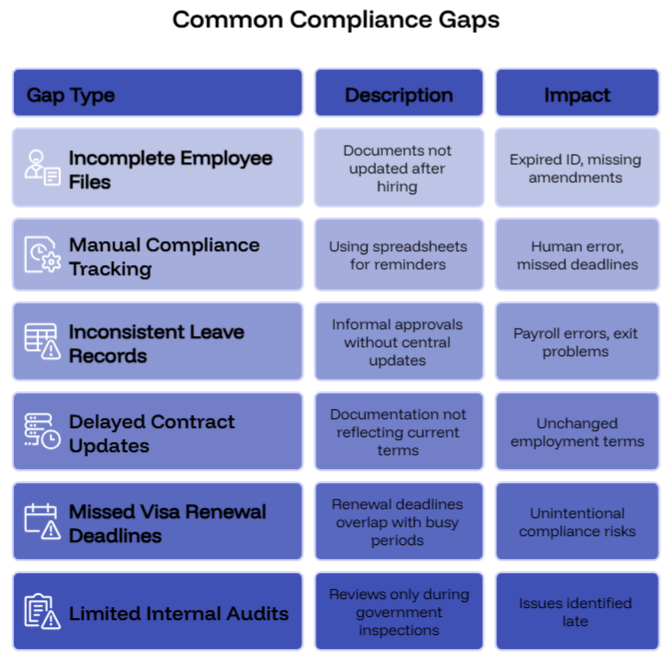
A lot of compliance issues do not arise because companies ignore regulations. Those happen because small administrative tasks gradually accumulate. The most common gaps include incomplete employee files, manual compliance tracking, inconsistent leave records, delayed contract updates, missed visa renewal deadlines, and limited internal audits.
Incomplete Employee Files:
Documents are collected during hiring but never updated. Months later, HR discovers expired identification or missing contract amendments.
Manual Compliance Tracking:
Using spreadsheets for reminders increases the risk of missed deadlines. Automated tracking significantly reduces human error.
Inconsistent Leave Records:
Managers approve leave informally through emails or messaging apps without updating central records. This creates issues during payroll processing and employee exits.
Delayed Contract Updates:
Employees receive promotions or salary increases but employment documentation remains unchanged. Company records should always reflect current employment terms.
Missed Visa Renewal Deadlines:
Renewal deadlines often overlap with busy operational periods. Without an active and diligent system, businesses might unintentionally create compliance risks.
Limited Internal Audits:
Some organizations only review HR documentation when a government inspection is expected. But routine internal reviews identify issues when they are still easy to correct.
How Regular Compliance Reviews Reduce Business Risk?
Compliance is not a one time project. Moreover, businesses change constantly, with new employees joining and existing employees changing roles. In addition, policies go through changes and government requirements are updated over time.
Regular compliance reviews help your business stay ahead instead of reacting after problems emerge. That’s why you should consider scheduling quarterly HR compliance reviews covering:
Small adjustments today often prevent expensive repairs tomorrow. For example, during a quarterly review, HR discovers three (03) visas expiring within sixty (60) days, two (02) unsigned contract amendments, and missing leave approvals for several employees. Addressing these issues early prevents unnecessary disruption later.
| Review Area | Questions to Ask |
| Employee files | Are all documents complete and current? |
| Employment contracts | Do contracts match current employment terms? |
| WPS records | Were all salary payments processed correctly? |
| Leave records | Are balances accurate and documented? |
| Visa compliance | Are upcoming renewals scheduled? |
| EOSB records | Are calculations up to date? |
| Policy compliance | Have recent policy updates been communicated? |
Practical Monthly HR Compliance Checklist:
For busy HR teams, a monthly checklist keeps compliance manageable.
You should review the following each month as completing these tasks monthly takes far less effort than correcting months of accumulated errors:
- Verify WPS salary submissions.
- Check upcoming visa expiries.
- Update employee files.
- Review leave balances.
- Confirm contract amendments are signed.
- Audit new hire documentation.
- Review employee resignations.
- Update EOSB calculations.
- Archive completed employee records.
- Schedule upcoming compliance reminders.
How Connect Group Helps Businesses Stay HR Compliant?
Compliance is not something businesses should only think about during inspections. It requires ongoing monitoring, consistent documentation, and proactive oversight throughout every stage of the employee lifecycle.
At Connect Group, we support UAE businesses by helping HR teams establish practical compliance systems that reduce administrative risk without adding unnecessary complexity. Instead of only providing one time advice and leaving businesses to manage everything themselves, Connect Group offers ongoing compliance monitoring that helps organizations with the following:
- Monitor critical compliance deadlines.
- Keep employee documentation organised.
- Review HR processes regularly.
- Identify compliance gaps before they become problems.
- Support businesses as regulations and workforce needs change.
This continuous approach gives your HR managers greater confidence that compliance remains part of everyday operations.

Stay Compliant Throughout the Employee Lifecycle:
Maintaining HR compliance involves building reliable processes that protect your employees and your business. Our HR compliance checklist UAE helps your business make sure that your employment contracts are accurate, employee files stay complete, WPS obligations are being met, leave records stay up to date, visas are renewed on time, and end-of-service benefits are properly managed.
Regular reviews, consistent documentation, and ongoing monitoring help reduce risk. If your business wants to strengthen its compliance processes without managing every detail alone, our team at Connect Group provides you ongoing compliance monitoring to support your HR team throughout the entire employee lifecycle. Contact us now for our services.